

https://zeno.fm/radio/radio-fortune-africa
By Cantona Joseph March 31, 2026 05:08 (EAT)


Gikomba Market chairperson Mbugua Kibathi has defended the ongoing demolitions, insisting the exercise is lawful and agreed upon by traders.
Kibathi dismissed claims that the demolitions are being carried out illegally, maintaining that the process is voluntary and follows prior consultations with traders and government agencies.
“I hear some people say that it is illegal demolition, there is nothing like illegal demolitions. For us, it is voluntary, you just shift yourself,” he said.
His remarks come amid heightened tensions at the market, where some traders have protested against the redevelopment plan under the Nairobi Rivers Regeneration Programme, accusing authorities of forceful evictions and the imposition of new relocation charges.
However, Kibathi rejected the narrative of forced evictions, saying traders were issued with a 30-day notice to vacate affected areas and had been engaged throughout the process.
“We were given a 30-day notice to evacuate. Those affected are ignorant,” he said, adding that leaders had reached an understanding with the Nairobi River Commission to ensure no trader would be left stranded.
“We agreed with the Nairobi River Commission that nobody will be evicted without being shown where to go,” he added.
The chairperson expressed confidence that traders would comply with the relocation plan, noting that many were already prepared to resume business in the designated areas.
“Our traders are willing to shift and very ready to work. From tomorrow morning, you will see them at their places of work,” he said, adding that resistance was largely driven by cartels occupying certain sections of the market.
“The stalls that have not been demolished are for those cartels,” he alleged.
Kibathi also addressed negotiations surrounding the controversial 50-metre riparian boundary, which initially threatened to displace a significant number of traders. He said a compromise had been reached to safeguard livelihoods while allowing redevelopment to proceed.
“The initial 30-metre radius meant that all the traders that operate there were to go home, but I could not accept that as the chairman,” he said.
“We then sat down with a multi-agency team and saw it wise to have an additional 20 metres that will accommodate all of us, those from 30 metres and those from 20 metres.”
Under the revised plan, the 30 metres closest to the river will remain untouched, while the additional 20 metres will be used to construct a modern market to accommodate affected traders.
The redevelopment is part of a broader government initiative aimed at restoring the Nairobi River while improving infrastructure and safety within surrounding markets. Principal Secretary for Housing Charles Hinga has defended the project, citing long-standing challenges such as fires, flooding and congestion at Gikomba.
Hinga has also addressed traders’ concerns over relocation costs, pledging that the government will cover all expenses related to the move.
“Whatever cost that is concerning your relocation, the government of Kenya is going to meet it. You will not be out of pocket,” the PS said.
Despite these assurances, scepticism remains among some traders, particularly over implementation and transparency of the
Nonetheless, Kibathi maintained that the redevelopment is in the best interest of traders and urged them to support the initiative.
He expressed optimism that the project would ultimately deliver a safer, more organised trading environment while preserving livelihoods within one of Kenya’s largest informal markets.
MP Kibagendi suspended again despite court order
Kitutu Chache South MP sent out of House for 14 days over TV remarks on Parliament
Audio By Vocalize

Kitutu Chache South MP Antoney Kibagendi has been suspended from the House for a second time, despite a court order barring Parliament from taking such action.
Kibagendi was suspended on Tuesday afternoon for 14 days over comments he reportedly made in February during a television interview in which he questioned the independence of Parliament.
The suspension followed a motion moved on the floor of the House by Majority Leader Kimani Ichung’wah, who cited the need to protect the dignity and integrity of Parliament over the MP’s claim that the August House had been auctioned.
“Pursuant to the provisions of Standing Order 108(2) and notwithstanding the provisions of Standing Order 110, Hon. Kibagendi be suspended from the House for a period of 14 days. I move this motion in the best interest of the dignity of each and every Member of this House,” Ichung’wah told MPs.
Temporary Speaker Peter Kaluma then put the question to the House, which approved the motion by acclamation, paving the way for Kibagendi’s removal from the chamber.
The House made the resolution despite a recent court decision that reinstated him after overturning an earlier suspension imposed by Speaker Moses Wetang’ula.
High Court Judge Bahati Mwamuye, on March 19, directed that Kibagendi be allowed to return to the House and continue performing his duties, pending the hearing and determination of a case he filed.
The judge stayed the Speaker’s decision of February 17, 2026, and dismissed a preliminary objection by lawyers representing the Speaker, who had argued that the court lacked jurisdiction to interfere with parliamentary procedures.
They contended that, under the doctrine of separation of powers, the High Court should not intervene in the internal affairs of Parliament.
However, Justice Mwamuye ruled that the matter raised constitutional issues, noting that the rights of the applicant were in question and that his constituents could be left without representation.
“Pending the hearing and determination of this suit, the applicant is hereby allowed to access Parliament and continue discharging his duties as a Member of Parliament,” the judge ruled, while restraining the Speaker and the National Assembly from initiating disciplinary action against the MP on matters related to the ongoing case.
Kibagendi moved to court through his lawyer, Ombui Ratemo, after he was suspended from Parliament and barred from accessing the House, including committee sittings.
The earlier suspension was announced by the Speaker.
Trump tells the UK and other countries ‘go get your own oil’ from Strait of Hormuz
Trump says the countries should “build up some delayed courage, go to the Strait, and just TAKE IT”.
Audio By Vocalize

US President Donald Trump says countries “like the United Kingdom” who can’t get jet fuel because of the restrictions around the Strait of Hormuz should “build up some delayed courage, go to the Strait, and just TAKE IT”.
In a post on Truth Social, he writes countries will “have to start learning how to fight for yourself, the U.S.A. won’t be there to help you anymore, just like you weren’t there for us,” addressing countries “which refused to get involved in the decapitation of Iran”.
“Iran has been, essentially, decimated. The hard part is done,” the post adds, ending with: “Go get your own oil!”
Since the start of the US-Israeli war with Iran on 28 February, death tolls have continued to rise across the region.
Iran: The US-based group Human Rights Activists in Iran (HRANA) report that 3,492 people have been killed since the war began – including 1,574 civilians, of which at least 236 were children.
Israel: Israel’s Magen David Adom ambulance service (MDA) said 19 people have been killed by missile fire since the start of the war.
Nine Israeli soldiers are reported to have been killed in Lebanon, Israel’s military says.
Lebanon: Lebanon’s health ministry says 1,247 have been killed, including 124 children.
The gulf: At least 24 people have been killed across the Gulf so far, most of them security personnel or foreign workers. That includes 11 people in the UAE and seven in Kuwait, while Oman, Saudi Arabia and Bahrain have each reported two deaths.
US: Thirteen US service members have been killed.
Beijing forum eyes cheaper funding for Global South
Developing countries at a Beijing forum highlight a $4 trillion financing gap and push for stronger cooperation
Audio By Vocalize

John Mwangi, a taxi driver who dropped me at the airport a few days ago, wanted to know what I was going to do in Beijing, China. I told him I was going to attend the 2026 Global South Financiers Forum.
“What is that?” he asked. I tried to explain, and he said plainly, “If that meeting helps me get a cheaper loan for a new taxi, let me know.”
That simple hope — for accessible finance that turns into tangible change — is why I paid attention to the talks in Beijing. In the end, I left convinced the forum held promise, but also aware that the hard part begins after the photo ops.
The forum convened under the banner “Releasing Mechanisms, Unveiling Outcomes, and Proposing Initiatives,” and organisers packed the opening day with speeches, a launch ceremony for a new council, and a string of panels on green finance, risk and talent.
Addressing the main forum, Xinhua News Agency President Fu Hua said Xinhua would “amplify the voice of the Global South and document its dynamic development.”
He added the agency would use its global network to “promote deeper financial cooperation among Global South countries” and to contribute “solutions to building a new global financial governance order.”
Those words sounded encouraging — particularly for countries like Kenya that depend on both better access to capital and reliable partnerships.
The context laid bare at the forum was stark. Many smaller economies across Asia, Africa, Latin America and Oceania are struggling to stay afloat. The Global South faces an estimated resource gap of $4.0 trillion a year — a shortfall that threatens progress on the Sustainable Development Goals (SDGS).
Traditional donors have failed to meet the long-standing 0.7 per cent GNI target for overseas development assistance, and recent political shifts have tightened aid flows further. Multilateral lenders, too, now attach stricter terms; many developing nations find bailouts harder to secure and conditions tougher to meet. The result is a financing squeeze that leaves projects unstarted and ambitions unrealised.
Given that reality, the forum’s twin prescription made sense: press wealthier nations for more climate and development support, and at the same time deepen South-South cooperation so members can help each other.
China already plays a leading role as a financier within the Global South, and its convening power mattered at this meeting. Yet South-South commitments have often been rhetorical; scaling up will require stronger institutional backing, transparent governance and concrete funding mechanisms.
Two developments at the conference were especially notable. First, the establishment of a council and “long-term operational mechanisms” signalled a bid to move beyond episodic summits toward sustained coordination.
Second, the launch of a “Global South Green Finance Cooperation Initiative” focused attention on standards, tools and projects that can attract private capital. If implemented properly, these instruments could lower risk, standardise green finance criteria, and make projects — from renewable energy to irrigation systems — more bankable for investors and local banks alike.
But words must translate to action. The forum awarded accolades and released reports, yet the challenge will be to convert declarations into pipelines of affordable credit and technical assistance.
For John ole Narkei, the difference between rhetoric and results is tangible: a pump that works, seeds that grow, markets that pay. For our governments, it means political will to engage in joint financing, share expertise, and accept common standards that reduce investor uncertainty.
The 2026 Global South Financiers Forum did more than stage grand statements: it proposed mechanisms and raised urgent questions about who will pay for development and how risks will be shared.
Now the council must show muscle — not by issuing more communiqués, but by committing resources, measuring outcomes and ensuring transparency. Only then will smallholders in Narok, entrepreneurs in Nairobi and communities across the South see the meetings in Beijing reflected in real, affordable finance back home.
Chinese President Xi Jinping congratulates World Data Organization on its inauguration
He stressed that China will uphold the principle of extensive consultation and joint contribution
Audio By Vocalize
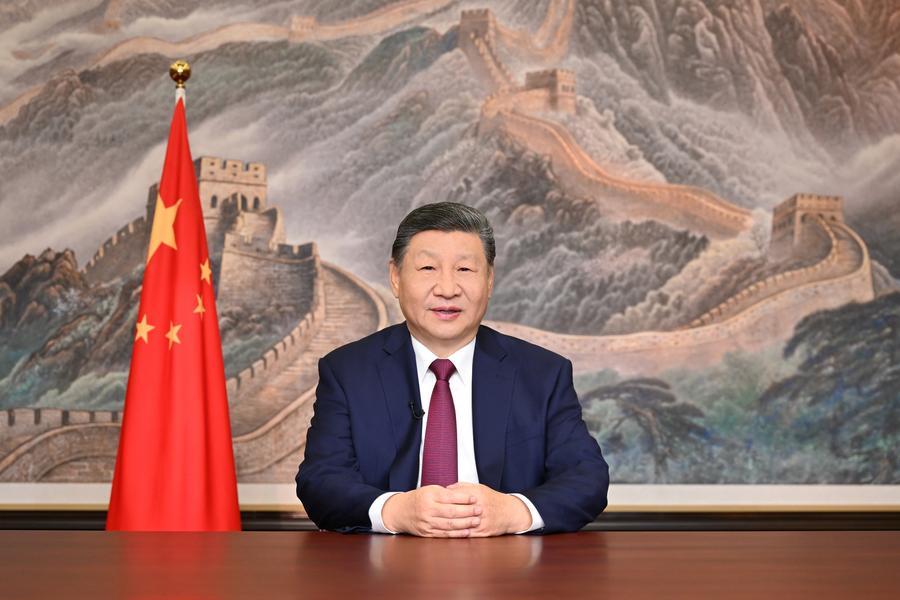
Chinese President Xi Jinping on Monday sent a congratulatory message to mark the inauguration of the World Data Organization (WDO).
The world is accelerating into the intelligent age, and the role of data as fundamental resources and an innovation engine is increasingly evident, Xi said.
“The WDO, with the mission of bridging the data divide, unlocking data’s value and powering the digital economy, provides a valuable platform for deepening international cooperation regarding data and improving global data governance,” Xi said.
ADVERTISEMENT
He stressed that China will uphold the principle of extensive consultation, joint contribution and shared benefits, and support the WDO in playing its role.
He noted that the country will work with all parties to forge consensus on data governance rules; promote innovation in digital and intelligent technologies; facilitate the secure, orderly flow and efficient development and utilization of data; serve the healthy development of the global digital economy; and ensure that the dividends of data better benefit people of all countries.
The inaugural assembly of the WDO was held in Beijing on Monday, with the theme of jointly building a data cooperation platform and sharing digital development opportunities.
The organization’s members include enterprises, universities, think tanks, international organizations, financial institutions and other entities from the global data sector.
Sports Focus: Fewer races, harder entry: China’s marathon reset
Behind the reduction in race numbers lies a broader goal: improving quality
Audio By Vocalize
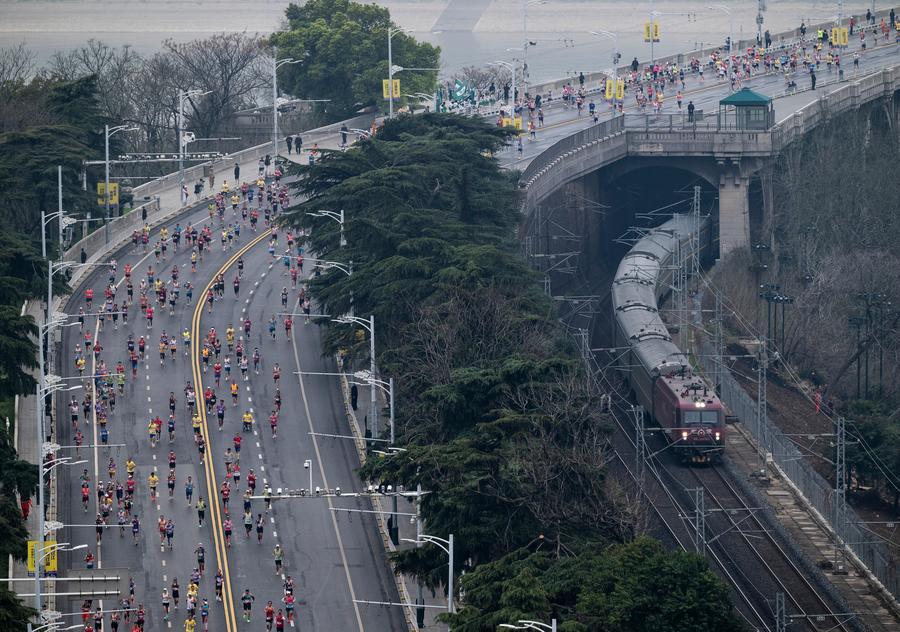
China’s marathon boom is entering a new phase, with fewer races, tougher entry rules and rising demand reshaping the sport.
As the spring racing season gets underway, the contrast is clear: fewer races, but surging demand and higher standards.
According to the Chinese Athletics Association, 39 marathons were held nationwide over the past two weekends, down from 57 during the same period last year.
Yet enthusiasm has not cooled. Instead, participation has intensified, with major races drawing record numbers of applications and increasingly slim odds of entry.
The shift follows a series of policy changes issued since late 2025, including stricter guidelines on race organization and a pilot framework for mass road-running events.
The measures aim to rein in years of rapid, sometimes unordered expansion.
FEWER RACES, HIGHER STANDARDS
Marathons spread quickly across China in recent years, often driven by local governments eager to boost tourism and visibility. But the surge also exposed gaps in organization, safety and resource allocation.
Under the new rules, accountability has been tightened. Organizers must now operate under a clearer responsibility structure led by local authorities, reinforcing the principle that “whoever hosts is responsible.”
The impact is already visible. In central China’s Hubei Province, the number of approved races is expected to fall to 22 this year, down from 31 in 2025.
“Most of the cuts are at the county level,” said Zhang Hua, head of the provincial athletics association. “Events without sufficient financial or organizational capacity have been scaled back.”For runners, however, fewer races have not dampened interest. The 2026 Wuxi Marathon drew nearly 500,000 applicants, underscoring the surge in demand, with the half-marathon entry rate as low as 2.9 per cent.The Wuhan Marathon recorded more than 450,000 registrations, while several other races, including those in Lanzhou, Chongqing and Xiamen, also saw more than 200,000 applicants.
Behind the reduction in race numbers lies a broader goal: improving quality.
“The core of the new policies is not to limit races, but to improve them,” said sports consultant Zhang Qing.
“They address long-standing issues and aim to make events fairer, safer and more professional.”
Fairness begins with entry systems. In the past, a portion of entries was reserved for invited runners, sponsors and other stakeholders, reducing the number of spots available through the public lottery. Now, regulations require that at least 90 percent of entries be allocated to the public.
At the Wuxi Marathon, known for its cherry blossoms, elite and invited runners accounted for just over nine percent of total slots, the lowest share in five years.
Safety has become a central focus under the new rules. Organizers are required to strengthen risk management, while runners are encouraged to adopt a more measured approach and prioritize completion over performance.
Under the new entry thresholds, full marathon participants are generally required to be at least 20 years old, and some events ask runners to provide proof of prior race experience, such as one full marathon or two half marathons completed within the past two years.
Half-marathon entrants may also need certified results from at least two races of 10 kilometers or longer.
“Raising the bar is about protecting runners’ lives,” Zhang Hua noted. “For amateur runners, the purpose of running a marathon is keeping fit, not blindly chasing personal bests or pushing limits.”
Speaking of the new policies, veteran runner Chen Weixin said, “These rules offer necessary protection to beginners.”
The 56-year-old recalled collapsing during his first marathon a decade ago due to a lack of proper training.
“I fainted during the race and was transferred to hospital for emergency treatment,” he said. “Without proper training, beginners are at high risk of accidents. Stricter rules can push participants to take the sport more seriously.”
ROAD RUNNING SHIFTS TO NEW PHASE
Industry observers say the new framework marks the transition of China’s marathon boom from rapid expansion to more structured growth.
Top-tier races remain powerful economic drivers. The Wuxi Marathon attracted more than 90 percent of its participants from outside the city, generating an estimated 510 million yuan (73.7 million U.S. dollars) in spending across tourism, hospitality and transportation.
“Reducing quantity is about breaking the cycle of low-quality, repetitive events,” said Wang Xiangfei, a professor at Wuhan Sports University. “Poorly organized races and low-standard participation would ultimately harm the entire industry.”
Meanwhile, opportunities are emerging for smaller and more specialized events. Shorter-distance races, once bundled into major marathon events, are now being separated and encouraged as standalone competitions, a move aimed at better matching supply with different levels of demand.
In Wuxi, the Yangshan Half Marathon, known for its peach blossoms, has been restructured into a 10-kilometer elite race while maintaining high certification standards. Organizers said the shift allowed them to refine the event while continuing to promote local tourism.
“I believe more people will take part in road running events in a safer manner in the future. Meanwhile, better regulated road races will also better showcase Chinese cities on the global stage,” Zhang Hua said.
All Rights Reserved © The Cantona Group PLC||2026
afghanistan, africa, albania, algeria, America, american-samoa, andorra, angola, anguilla, antarctica, antigua-and-barbuda, argentina, armenia, aruba, arusha, australia, austria, azerbaijan, bahamas, bahrain, bangladesh, barbados, belarus, Belgium, belize, benin, bermuda, bhutan, bolivia, bosnia-and-herzegovina, botswana, Boukinafaso, brazil, brunei-darussalam, bulgaria, burkina-faso, burma, burundi, california, cambodia, cameroon, canada, cape-verde, cayman-islands, central-african-republic, Chad, chicago, chile, china, christmas-island, cocos-keeling-islands, colombia, comoros, congo, cook-islands, costa-rica, cote-divoire-ivory-coast, Croatia, cuba, cyprus, czech-republic, darsalaam, democratic-peoples-rep-north-korea, democratic-republic-of-the-congo-kinshasa, denmark, djibouti, dodoma, dominica, dominican-republic, dr-congo, dubai, east-timor-timor-leste, ecuador, egypt, egypty, el-salvador, england, equatorial-guinea, equitorial-guinea, eritrea, estonia, eswatini, ethiopia, falkland-islands, faroe-islands, federal-states-of-moldova, fiji, finland, Florida, france, french-guiana, french-polynesia, french-southern-territories, gabon, gaza, georgia, germany, ghana, gibraltar, goma, Greece, greenland, grenada, guadeloupe, guam, guatemala, guinea, guinea-bissau, guyana, habari, haiti, holy-see, honduras, hong-kong, houston, hungary, iceland, india, indonesia, Iowa, iran, iran-islamic-republic-of, iraq, ireland, israel, italia, italy, ivory-coast, jamaica, japan, jordan, karatu, kazakhstan, kilimanjaro, kinshasa, kiribati, kiswahili, korea, kosovo, kuwait, kyrgyzstan, lao, latvia-lebanon-lesotho-liberia-libya-liechtenstein-lithuania-luxembourg, Lebanon, liberia, macau, madagascar, malawi, malaysia-maldives, Mali, malta, marshall-islands-martinique-mauritania-mauritius, massechutes, mayotte, mazingira, mbeya, meru, mexico, miami, micronesia, monaco-mongolia-montenegro, montserrat, morocco, mozambique-myanmar, mtwara, mwanza, namibia, nauru, nepal, netherlands, netherlands-antilles, nevada, new-caledonia, new-zealand, newyork, nicaragua, niger, nigeria, niue, north-macedonia, northern-mariana-islands, norway, oman, pakistan, palau, palestine, palestinian-territories, panama, papua-new-guinea, paraguay, peoples-democratic-republic, peru, philadhephia, philipians, Philippines, pitcairn-island, poland, politics, Portugal, puerto-rico, qatar, republic-of, republic-of-brazzaville, republic-of-south-korea, reunion-island, romania, Russia, russian-federation, rwanda, sahara-occidental, saint-kitts-and-nevis, saint-lucia, saint-vincent-and-the-grenadines, samoa, san-marino, sao-tome-and-principe, saudi-arabia, saudiarabia, scotland, Senegal, serbia, seychelles, sierra-leone, Singapore, singida, slovakia-slovak-republic, slovenia, solomon-islands, somalia, southafrica, spain, sri-lanka, sudan, suriname, swaziland-eswatini, sweden, switzerland, syria, syrian-arab-republic, tabora, taiwan-republic-of-china, tajikistan, tanzania, texas, thailand, the-gambia, tibet, timor-leste-east-timor, togo, tokelau, tonga, toronto, trinidad-and-tobago, tunisia, turkey, turkmenistan, turks-and-caicos-islands, tuvalu, uganda, united-arabs-emirates, united-kingdom, united-states, uruguay, uzbekistan, vancover, vanuatu, vatican-city-state-holy-see, venezuela, vietnam, virgin-islands-british, virgin-islands-u-s, wallis-and-futuna-islands, wallis-and-futuna-islands, wallis-et-futuna, washington-dc, western-sahara, yemen, zambia, zambie, zimbabwe

Listen Live Radio Fortune Africa
Ukweli Na Burudani.
-Be ready to be Impacted, Inspired & Empowered.
-Keep watching our Channels
Cantona Cast Television,
Fortune Television Network (FTN)
An attitude determines an altitude.
All Rights Reserved © The Cantona Group PLC||2025
Fediverse Followers
Discover more from cantonadigital
Subscribe to get the latest posts sent to your email.