Radio Fortune Africa -Ukweli na Burudani
https://zeno.fm/radio/radio-fortune-africa

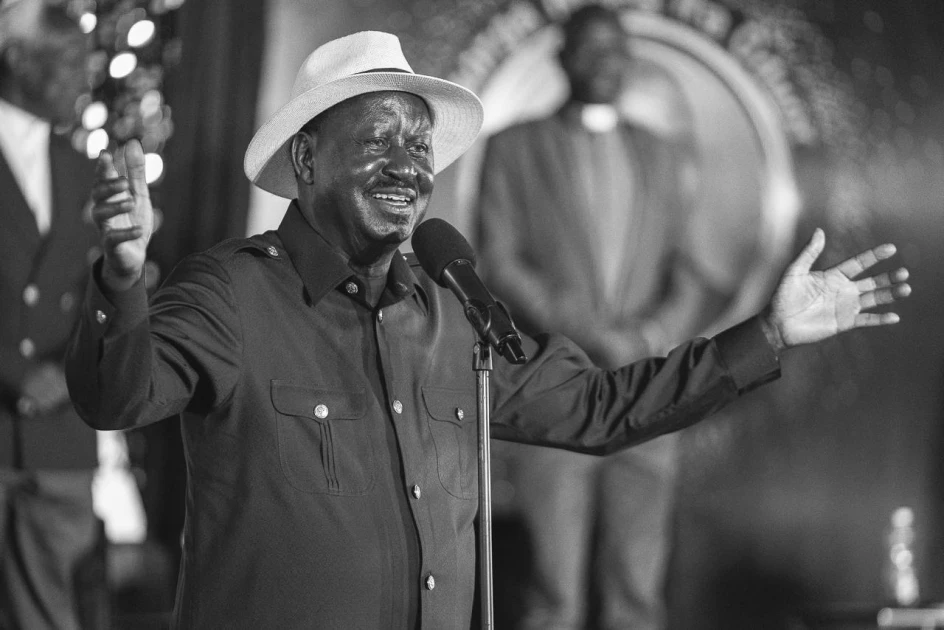
Raila Odinga has been a towering figure in Kenyan politics
Former Kenyan Prime Minister Raila Odinga has died at the age of 80, family sources have told the BBC.
Odinga died on Wednesday while receiving medical treatment at a hospital in India.
The Orange Democratic Movement (ODM) party leader died on Wednesday in the Indian city of Kochi, where he was receiving treatment.
Indian newspapers Mathrubhumi and The Hindu first reported the news on Wednesday morning, saying Odinga suffered cardiac arrest during a morning walk at the Sreedhareeyam Ayurvedic Eye Hospital and Research Centre, where he has been under treatment for the last five days.
A spokesman for the facility told AFP that Odinga experienced some breathing difficulties and collapsed at around 07:45 am. He was rushed to a nearby private hospital, but his condition deteriorated.
Indian police said the former PM was on a walk with his sister, daughter, and a personal doctor when he collapsed.
An Indian police security officer and a Kenyan security officer were also with them at the time, a local police superintendent told the news agency.
Born on January 7, 1945, in Maseno, Odinga was the son of Mary Juma Odinga and Jaramogi Oginga Odinga, Kenya’s first vice president under President Jomo Kenyatta.
Odinga was arrested and charged with treason after being accused of being among the masterminds of the 1982 coup attempt to overthrow the government of then-President Daniel arap Moi.
He was released six years later in February 1988 but detained again in August that year to be released in June 1989.
Odinga has been a long-time opposition leader and the Member of Parliament (MP) for Langata from 1992 to 2013.
He also served as Prime Minister from 2008 to 2013 under President Mwai Kibaki’s administration.
Odinga has unsuccessfully run for the presidency five times, including in 2017 and in 2022, both of which he alleged electoral fraud.
There has been speculation about the ODM leader’s health in recent weeks after he went missing from public events last month.
His elder brother, Siaya Senator Oburu Oginga, on Saturday said he had been unwell but was “recuperating and resting” in India, and not in critical condition as alleged by a section of politicians to the media.
“I want to take this opportunity to clarify this, there have been a lot of rumours about our party leader, Raila Odinga, that he is very sick, that he is almost dying, and that he is completely out,” the senator told journalists in Ugunja.
“But I want to tell you that he is out and about, and he is just like any other human being who was indisposed a little, and he is now recuperating and resting, but he was not in those conditions alleged.”
His party also denied that Odinga was battling health complications.
In recent weeks, there has been speculation about his health, although family members and political allies had dismissed reports suggesting he was critically ill. Politicians and other leaders, including Ethiopian Prime Minister Abiy Ahmed, have been sending their condolences.
A political mobiliser and towering figure in Kenyan politics, Odinga ran unsuccessfully for the presidency five times. He rejected the results on each occasion, often saying that victory had been stolen from him.
He was vindicated by Kenya’s highest court after the 2017 elections, when it annulled Uhuru Kenyatta’s victory and ordered fresh polls. However, he boycotted the rerun, demanding electoral reforms.
The disputed election of 2007, in which Odinga claimed he was cheated of victory by Mwai Kibaki, led to the biggest crisis in Kenya’s history.
Violence erupted around the country, resulting in 1,200 deaths and about 600,000 people were forced to flee their homes.
To resolve the crisis, a power-sharing agreement was brokered by former UN Secretary-General Kofi Annan, leading to the formation of a unity government in which Odinga became prime minister.
He has often reconciled with the incumbent president after contentious elections.
After his most recent defeat in 2022, he later joined President William Ruto in a so-called broad-based government, which brought several of his allies into key positions.
He defended the move as necessary for national unity, coming in the aftermath of watershed nationwide protests last year that culminated in the storming of parliament. Dozens of protesters were killed in confrontations with security officers.
The Ruto administration backed Odinga’s bid to become chairperson of the African Union Commission, in elections held earlier this year. Despite strong regional support, he lost to Djibouti’s Mahmoud Ali Youssouf.
Odinga inspired a passionate and loyal following throughout his political career, especially in western Kenya, where he was from.
His supporters called him “Baba” (Father), “Agwambo” (Act of God), and “Tinga” (Tractor) – drawn from his party’s symbol during the 1997 elections.
He was widely regarded as a master strategist and mass mobiliser, often drawing huge crowds to his political rallies, and he had a deep ability to connect with ordinary people.
He will be remembered for his unwavering fight for democratic freedoms and human rights.
He was a former political prisoner, and holds the record for being Kenya’s longest-serving detainee. His struggle against one-party dictatorship saw him detained twice (from 1982 to 1988 and 1989 to 1991) during the rule of Daniel arap Moi.
He was initially imprisoned for trying to stage a coup in 1982, which propelled him on to the national stage.
National Assembly adjourns sitting after Raila’s death
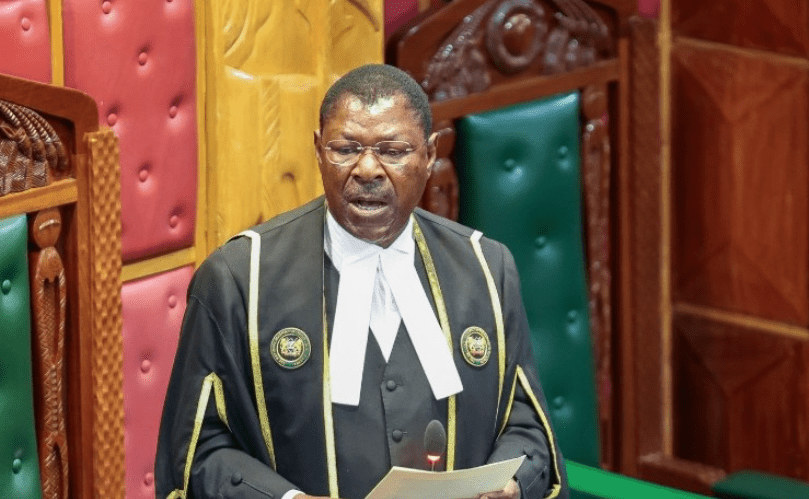
Speaker of the National Assembly Moses Wetang’ula/FILE
The National Assembly adjourned its Wednesday morning sitting following the death of former Prime Minister Raila Odinga.
The Speaker Moses Wetang’ula, who had just attended an event at State House in Nairobi, however, did not give a reason for adjourning the sitting but told MPs they would be informed during the afternoon sitting.
“I have just come from an event where eight bills from this House have been ascended. It is the highest number ever ascended together, which is very good,” he said.
“I will invoke my authority under Standing Order Number One directly as follows. The sitting of the House this morning is adjourned. We will have a meeting at 2.30 this afternoon where the speaker will give you some important communication. For now, the House stands adjourned and we all be upstanding.”
Raila died on October 15, 2025, at the age of 80 after suffering a heart attack in India
Raila was one of Kenya’s most influential political figures and has been a central player in the country’s political landscape for over four decades.
Known for his fiery rhetoric, unwavering opposition stance, and a career marked by both triumphs and controversies, Raila’s name is almost synonymous with Kenya’s struggle for democratic reform.
Despite never ascending to the presidency, Raila’s impact on Kenya’s democratic evolution is indelible.
He has championed constitutional reforms, multiparty democracy, and social justice, often at great personal cost. He remains a towering figure in African politics and continues to command significant influence, both within Kenya and beyond.
Raila has also taken on a more continental role, including being nominated as the African Union’s High Representative for Infrastructure Development, a position that underscores his continued relevance in regional and global affairs.
He was a founding member of the Forum for the Restoration of Democracy (FORD) and later the National Development Party (NDP), before merging with the ruling party, KANU, in 2001—only to part ways again soon after.
In 2005, following the defeat of a government-backed constitutional referendum, Raila led the formation of the Orange Democratic Movement (ODM), which became a major opposition force.
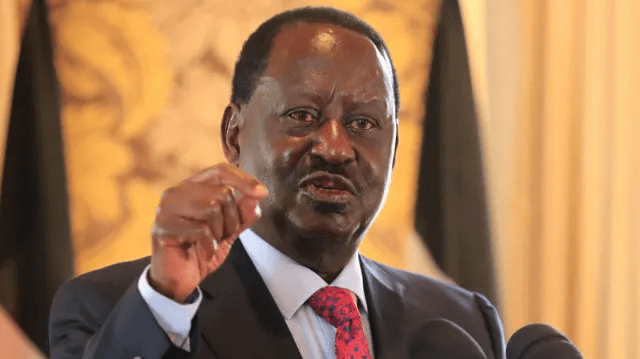
Since then, he has run for the presidency five times — in 1997, 2007, 2013, 2017, and 2022.
In the 2022 presidential elections, Raila made his fifth bid backed by retired president Uhuru Kenyatta. He narrowly lost to William Ruto, Kenya’s current president, a result he challenged in court but was upheld by the Supreme Court.
Born on January 7, 1945, in Maseno, Kisumu County, Raila is the son of Jaramogi Oginga Odinga, Kenya’s first Vice President and a key figure in the country’s independence movement.
All Rights Reserved © The Cantona Group PLC||2025
Discover more from cantonadigital
Subscribe to get the latest posts sent to your email.
 cantonadigital